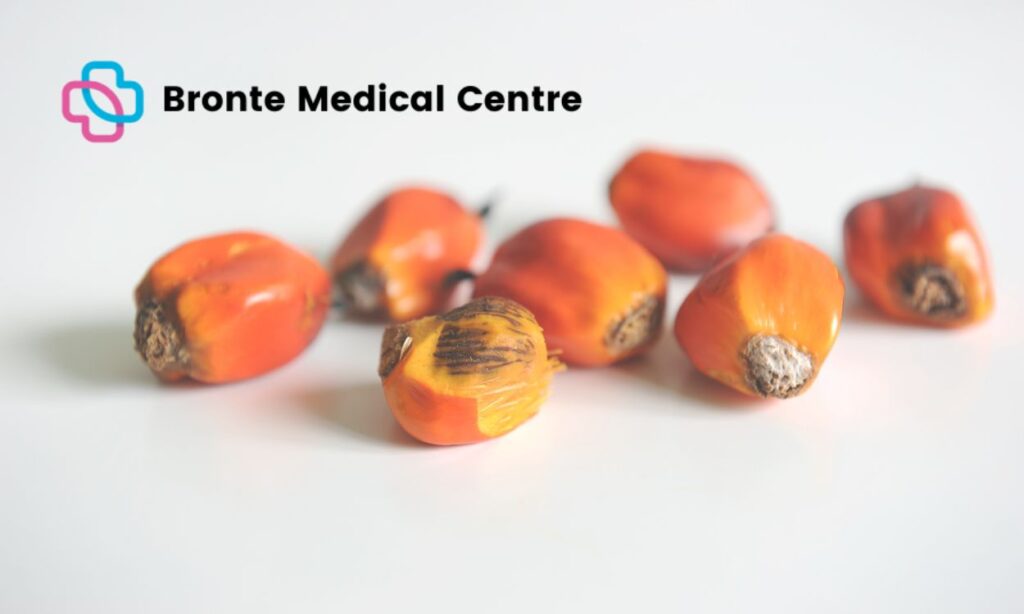
Palm oil is a common ingredient in many snacks and drinks. Unfortunately, they don’t provide much nutrition and are loaded with sugar and fat. Therefore, it makes sense to eliminate them from your diet and reduce your palm oil intake. Additionally, this will benefit your overall health.
Vitamin E
Palm oil is a rich source of Vitamin E, a type of antioxidant. It is the first line of defense against lipid membrane peroxidation. The antioxidant properties of vitamin E are due to its fused heterocyclic ring, in which the oxygen atom is maintained in a perpendicular orbital. This orbital overlaps with the semi-occupied molecular orbitals of the lipid radical, stabilizing it.
Palm oil contains tocotrienols and tocopherols, two types of vitamin E. Tocotrienols are more potent antioxidants than tocopherols. They are only found in palm oil and rice bran oil. The first research on tocotrienols was done by Prof. Chandan K Sen of the Ohio State University Medical Centre.
Carotenes
Various studies have been conducted to identify the presence of carotenes in palm oil. These studies are aimed at providing reference materials for product development. Moreover, they desire to determine the proper storage conditions of palm carotenes for further research and development. Therefore, a thorough study of the carotenes in palm oil is essential to maximize the benefits of this valuable ingredient.
Currently, there are 11 different types of carotenes present in palm oil. However, their composition differs from one type to another. Although quantitative analysis of these carotenes is not possible, qualitative research can be used to identify their presence. Furthermore, the wide range of carotenes in palm oil can serve as a marker to differentiate the oil type without proper labeling.
Saturated fats
Palm oil is a standard oil used in cooking, but it’s not the only kind of oil you should avoid. Some people are concerned about palm oil’s high concentration of saturated fats, but these fats are not all bad for you. You can get plenty of beneficial monounsaturated fats from palm oil and reduce your risk of heart disease.
Palm oil is used in many processed foods. It has a high smoke point, making it ideal for high-temperature cooking. Its high smoke point benefits frying and gives foods a creamy mouthfeel. This makes it a versatile oil.
Environmental impact
Palm oil is the leading ingredient in many products found in supermarkets, including ice cream, soap, biscuits, and chocolate. It is also known to be one of the most harmful environmental ingredients. It is known to cause deforestation and is implicated in the destruction of rainforests. In addition, it often requires pesticides and fertilizers, which run off into waterways and impact downstream biodiversity.
It is estimated that approximately half of the food we buy comes from palm oil, a highly controversial vegetable oil. It is used in various products, including ice cream, packaged bread, lipstick, soap, and detergent.
Health benefits
Palm oil is packed with nutrients that are important for the human body. Its fatty acids are well balanced and contain vitamin E and carotenoids, a group of antioxidant compounds that have been proven to fight cancer. The fats in palm oil are also high in tocotrienols, which have powerful antioxidant properties. In addition to fighting cancer, they may help the body fight other inflammatory diseases.
Palm oil benefits the brain, a vital organ for maintaining overall health. It protects neural nerves from damage by free radicals. This helps prevent the onset of dementia and other nervous disorders. Palm oil also prevents the build-up of plaque in arteries, which is a significant cause of heart disease. Antioxidants in palm oil can reverse this build-up and prevent blockages.
If you consider you need medical attention to diagnose your health, please visit us at Bronte Medical Centre. Our team of professionals will attend to you as soon as possible; see how our health services are in Oakville.